

Stem Cell IV Therapy for Ulcerative Colitis
Whatever health obstacles you’re facing, our cutting-edge regenerative applications aim to reduce discomfort, support healing, and restore function. Use our short Treatment Success Survey to find out if Stem Cell Therapy will work for you.
Dr. Jane Hendricks
NOTE: Unlike other stem cell clinics, our treatments are comprehensive and includes up to 6 months of follow up visits.
The year this Phoenix practice began administering regenerative protocols.
Structured physician follow-up is included in every treatment plan.
The physician who evaluates you remains with you through every review.
Product is supplied by an FDA-registered laboratory partner.

Stem Cell IV Therapy for Ulcerative Colitis
Now there is a treatment that has shown to benefit patients long term.
It has a dramatic effects within just a few months.
Patients report a significant improvement in quality of life.
The number of bowel movements is reduced to a normal number and bleeding stops or is greatly reduced.
The abdominal pain goes away, the patient gains weight, and gets sick less often.
The most significant benefit is not having to live with flares that disrupt your life. And travel is possible again!
Symptoms, and how stem cell therapy is used.
An overview to bring to your physician consultation—not a substitute for a diagnosis.
Symptoms
The symptoms of Ulcerative Colitis vary from minor to debilitating and can significantly affect your quality of life.
The diagnoses is made once a patient presents with a flare.
Flares can last weeks to months.
The acute symptoms include multiple bowel movements per day with or without blood and mucus.
Chronic abdominal pain with cramping and nausea, extreme fatigue and anemia are also common.
Patients with irritable bowel disease are extremely malnourished due to the inability to absorb nutrients from their food.
For this reason, they get sick often, lose hair, and have overall weakness.
Treatments
Conventional treatments for Ulcerative Colitis are quite standard.
In general, prednisone is used to treat the flares.
Some patients stay on a low dose for long term.
Others manage symptoms by taking a biologic and use the prednisone only when having a flare.
Unfortunately, biologics are immunosuppressive drugs which are never good to take for long term.
This class of medications which are chemotherapy agents put you at risk for developing cancer and increase your vulnerability to infections such as colds and flus.
These drugs are metabolized by the kidneys and liver so you must be closely monitored with blood work if taking them long term.
The downfall of conventional treatments for IBD (irritable bowel disease) is that the goal is to control symptoms, not reverse disease; therefore, the patient can never stop taking the medications.
When one biologic stops working they switch you to a different one.
Treatments that manage symptoms do not prevent the possibility of a partial or complete colectomy.
Many who get diagnosed with ulcerative colitis are young adults.
This leaves decades for the disease to progress, even with the management of symptoms.
If your quality of life has been diminished by this potentially terminal illness it’s time to look at something that may just change your life.
How do Stem Cells Help with Ulcerative Colitis?
Stem cell infusions deposit millions of health building and immunoprivileged cells into the system.
These cells have the potential to repair damaged tissues, promote healing, and stimulate the body’s natural regenerative processes.
One of the exciting applications of stem cell infusions is in the field of autoimmune conditions using stem cells.
Clinical research has shown promising results in using stem cells to treat Ulcerative colitis.
Stem cells respond to cytokine signaling from injured tissue, so in this case the stem cells would migrate to the large intestine.
There they reduce inflammation and facilitate healing and repair.
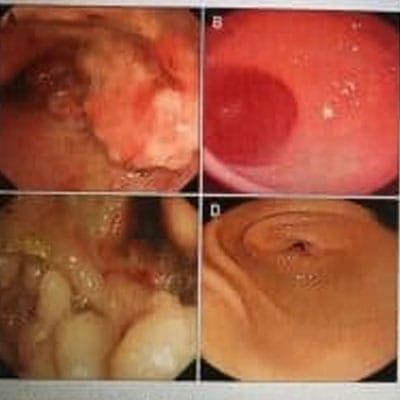
Here you can see the colonic tissue before and 12 months after a patient received the stem cell treatment which shows significantly less inflammation and lesions.
Less inflammation means a balancing effect on the number of bowel movements, less pain and a reduction in diarrhea and constipation.
Studies are ongoing as to the many benefits of this life changing treatment for IBD patients.
What our patients can expect from us
Personalized treatment plans tailored to individual needs and health goals.
Comprehensive pre-treatment evaluation and ongoing progress monitoring
Access to cutting-edge regenerative medicine therapies
One conversation. No cost, no deposit, no pressure.
Begin with a physician assessment of candidacy—and a clear explanation of what Dr. Hendricks would suggest instead when this is not the right fit.