

Regenerative Medical Clinic offering Stem Cell Therapy to residents of Florida
Whatever health obstacles you’re facing, our cutting-edge regenerative applications aim to reduce discomfort, support healing, and restore function. Use our short Treatment Success Survey to find out if Stem Cell Therapy will work for you.
Dr. Jane Hendricks
NOTE: Unlike other stem cell clinics, our treatments are comprehensive and includes up to 6 months of follow up visits.
The year this Phoenix practice began administering regenerative protocols.
Structured physician follow-up is included in every treatment plan.
The physician who evaluates you remains with you through every review.
Product is supplied by an FDA-registered laboratory partner.

A Healthy Lifestyle in Florida
Healthy dining is abundant in the state of Florida. One such place is Living Green Cafe in Tavares, FL. As far as fitness, one must check out Lake Nona Performance Club which has tennis courts, rock climbing and pools.
We serve the health minded patients in Florida with more answers when it comes to medical treatments.
Symptoms, and how stem cell therapy is used.
An overview to bring to your physician consultation—not a substitute for a diagnosis.
Symptoms
Crohn’s disease is an autoimmune condition in which the immune system targets intestinal cells.
This results in chronic inflammation, pain, and diarrhea which is disruptive to daily activities.
The cause is unknown and could be related to an unhealthy microbial environment and infections.
Medications and vaccines may also be implicated.
The symptoms can be debilitating to live with and include diarrhea, urgency, fatigue, weak immune system, and joint pain.
In severe Crohn’s, fistulas may develop which are difficult to treat and result in repetitive surgical procedures and frequent antibiotics.
Other symptoms include lower abdominal cramping, bloating and nausea.
Patients have a difficult time gaining weight and get sick often due to a compromised immune system and chronic malnutrition.
A patient can tend to constipation or diarrhea, having 5-15 bowel movements per day.
Due to the urgency and frequent bowel movements, activities such as travel and work become challenging.
Crohn’s disease is progressive with no known cure.
Treatments
Conventional treatments include prednisone, biologics, and surgery.
Prednisone is normally prescribed on a short term basis during a flare, although some patients take it on a daily basis.
Prednisone suppresses the immune system which controls the symptoms, however this does not result in healing.
The long term use of steroids weakens the bones and connective tissue, and increases the frequency of colds and illnesses.
Indeed, prednisone is not a viable long term solution for any patient.
The biologics are chemotherapy type drugs which are taken for long term for the purpose of preventing flares.
Unfortunately, most patients are not aware that they are taking a chemotherapy type medication with long term health risks such as cancer.
Despite these treatments, most patients end up having to get partial or full colectomies.
Our clinic wants to prevent this outcome by offering alternatives to symptom control and surgery.
How can a Stem Cell IV help with Crohn’s Disease?
Stem cells are produced in our bodies to help heal and regenerate injured or unhealthy tissue.
They also secrete substances that decrease inflammation in the body.
In autoimmune conditions there is an imbalance in the inhibitory part of the immune system.
The immune system becomes overactive which causes ongoing inflammation.
Stem cells help to bring the immune system back into balance, resulting in less inflammation.
They are also anti-microbial which is important in treating IBD.
Stem cells facilitate the healing and replacement of injured tissue with strong healthy tissue.
Stem cells have the ability to migrate to areas of injury where they will begin secreting valuable proteins to start the repair process.

What results can I expect from a Stem Cell Infusion?
Many studies have been done in the last 20 years on the use of mesenchymal stem cells for Crohn’s patients which show positive results.
Our patients experience a decrease in symptoms within a few weeks after one stem cell infusion.
Dr. Jane Hendricks has treated IBD for 22 years and offers a 180 day regenerative program to her patients at no additional cost.





Discover Your Potential
Use our short survey to explore whether stem cell therapy is right for you.
Our carefully crafted questions will help us understand your unique situation and determine if you’re a good candidate for our treatments.
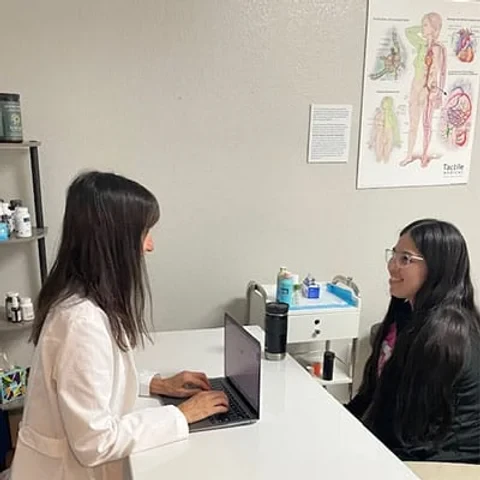
Personalized Consultation
Schedule a one-on-one consultation with the doctor virtually or in person.
She’ll review your health questionnaire, discuss your health goals, and create a tailored treatment plan designed specifically for you.
Call Now: 480-334-8278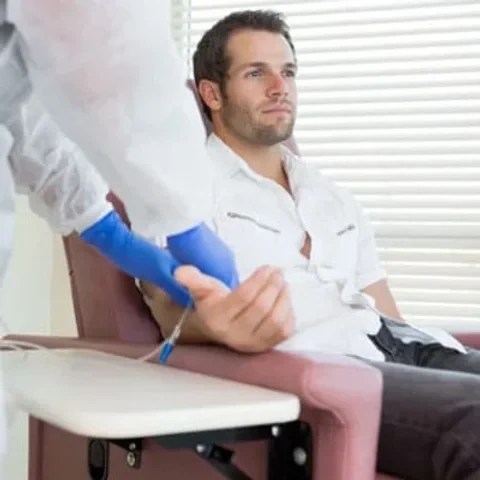
Begin Your Transformation
Start your personalized stem cell therapy program.
Our state-of-the-art treatments, combined with ongoing support and monitoring, will guide you on your journey to improved health and vitality.

Embrace Your Renewed Health
Experience the benefits of your stem cell therapy. With the doctor’s one on one guidance, you’ll learn how to maintain your improved well-being, return to activities you love, and enjoy a higher quality of life.
Your transformation doesn’t end with treatment – it’s just the beginning of your revitalized future.
From first conversation to the 6-month review.
A measured process designed to reduce uncertainty before treatment and maintain continuity afterward.
A 15-minute consultation
Your health goal and what you hope to regain. Ends with a direct candidacy assessment and treatment plan with pricing.
Workup and written protocol
Any remaining diagnostics, then a written plan outlining preparation, route, sequence, supporting care, and complete pricing to consider without pressure.
Administration at the Phoenix clinic
Intravenous infusion or coordinated image-guided injection. Lot documentation is reviewed beforehand; most patients return home the same day.
Structured follow-up with the physician
Scheduled reviews, supporting-care adjustments, and clear documentation of what has and has not changed against the agreed baseline.
A maintenance plan, or a candid conclusion
When there is a meaningful response, the plan shifts to maintaining it. When there is not, the result is stated plainly.
What Our Patients Have to Say.
Hear directly from patients about the deciding, the doubts, the cost, and the experience. Individual accounts are never a prediction of your outcome.
Transparency before commitment.
The cost and outcome expectations should be discussed before - not after - a patient decides to proceed.
Cost transparency
Insurance does not cover regenerative medicine.
HSA and FSA funds may be accepted, and third-party patient financing may be available subject to approval.
Complete written pricing is provided before commitment.
What to expect
Due to our candidacy assessments, we enjoy an over 97% success rate. Results vary depending on your current health status, age, lifestyle, and the medical condition and stage being treated.
Questions worth asking any clinic.
Do you process cells at the clinic?
No. The finished product is prepared by an independent FDA-registered, AATB-accredited laboratory and delivered on a scheduled cold chain. That separation keeps manufacturing and treatment responsibilities distinct.
Is this FDA-approved?
No. These treatments are investigational and should be described that way. The physician reviews the available evidence for your condition, including its limitations.
Will insurance cover it?
No coverage is expected for the treatment itself. HSA and FSA funds may be accepted, and third-party financing may be available. Written pricing comes before any commitment.
How do I know whether I am a candidate?
That is the purpose of the complimentary consultation. Bring recent labs or imaging when available. The discussion ends with a direct answer and the reasoning behind it.
One conversation. No cost, no deposit, no pressure.
Begin with a physician assessment of candidacy—and a clear explanation of what Dr. Hendricks would suggest instead when this is not the right fit.